
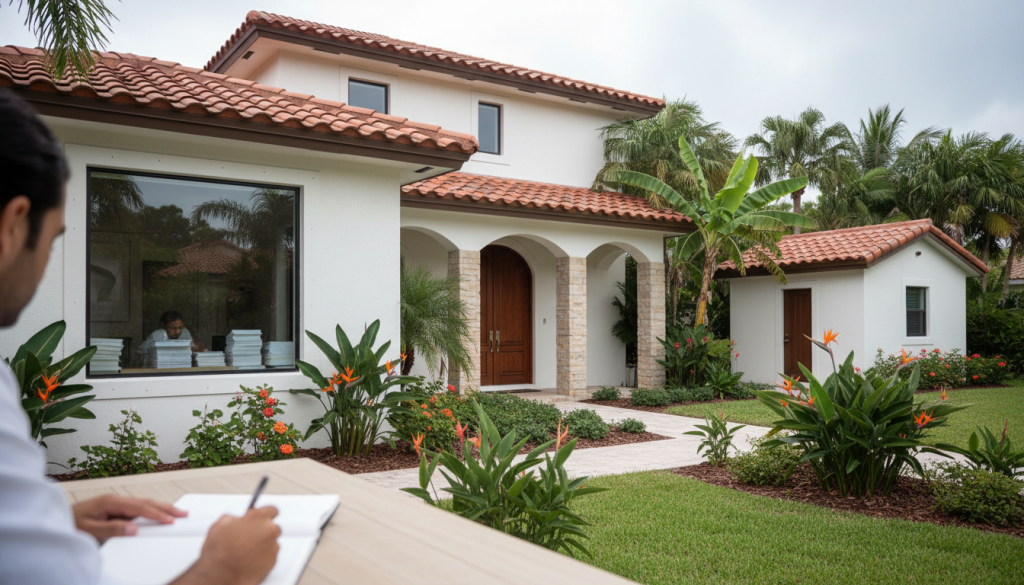
Ask someone what homeowners insurance covers and the first answer is usually pretty simple: “The house.”
That’s true, but it’s only part of the story.
A homeowners insurance policy can include several different types of protection, and each one serves a different purpose. Understanding those pieces makes it much easier to review a quote, compare options, or look at your renewal and know what questions to ask.
This is especially important in Florida, where hurricanes, wind, flooding, roof condition, and rebuilding costs can all become part of the insurance conversation. The exact coverage will always depend on the policy, insurer, endorsements, exclusions, deductibles, and limits, but here are some of the major areas Florida homeowners should understand.
Coverage for the Home Itself
Dwelling coverage generally applies to the insured structure of your home when it is damaged by a covered cause of loss. This is typically one of the largest numbers you’ll see on your declarations page.
The market value of your home and the cost to rebuild your home are not the same thing.
A home’s market value can be influenced by the neighborhood, location, land value, school district, real estate demand, and many other factors. Insurance is concerned with the cost associated with repairing or rebuilding the insured structure after a covered loss, subject to the policy terms and coverage limits. That’s why you shouldn’t automatically compare your dwelling coverage to what Zillow says your home is worth and assume something is wrong because the numbers don’t match. They’re measuring different things.
What About Other Structures on the Property?
Your house may not be the only structure that needs consideration.
A detached garage, shed, fence, gazebo, or another qualifying structure may fall under what’s commonly called other structures coverage. If you have significant structures that aren’t physically attached to your home, mention them when reviewing your insurance. Don’t assume that simply because something sits on your property, it automatically has all the coverage you expect.
Your Belongings Matter Too
Think about everything inside your home.
- Furniture.
- Clothing.
- Televisions and computers.
- Kitchen items.
- Electronics.
- Tools.
- Sports equipment.
Many of those belongings may fall under the personal property portion of a homeowners policy when damaged or lost because of a covered event. But there can be limitations. Certain categories of property, such as jewelry, collectibles, artwork, firearms, cash, or other valuable items, may be subject to special limits or conditions depending on the policy. If you own something particularly valuable, don’t simply assume the standard policy provides the level of protection you want. Ask.
A Simple Home Inventory Can Be Extremely Helpful
Here’s something homeowners can do that costs virtually nothing:
- Take out your phone and walk through your house.
- Record a video of each room.
- Open closets and cabinets.
- Photograph major purchases.
- Save receipts, serial numbers, model numbers, or appraisals for valuable items when practical.
- Store that information somewhere you can access even if your home or phone is damaged.
Nobody wants to imagine losing a room full of belongings, but trying to remember everything you owned after a major loss can be much harder than documenting it beforehand.
Personal Liability Is Part of the Picture
Homeowners insurance isn’t only about physical property.
Personal liability coverage may help protect you financially if you’re legally responsible for certain injuries or property damage involving someone else, subject to the terms and exclusions of your policy.
For example, liability issues can arise when someone is injured on your property. The appropriate liability limit isn’t necessarily the same for every homeowner. As your assets and financial responsibilities change, it’s worth reviewing whether your liability coverage still makes sense for your situation.
What Happens If You Can’t Live in the House?
Imagine a covered loss damages your home badly enough that you temporarily can’t live there while repairs are being completed. Where do you stay? How do you handle the additional cost?
Homeowners policies may include coverage commonly referred to as additional living expenses or loss of use, subject to the policy’s limits and conditions. This may help with certain increased living expenses resulting from a covered loss. It’s one of those coverages that can be easy to overlook when shopping for insurance because most people are understandably focused on the house itself. But after a significant covered loss, it can become very important.
What About Hurricanes and Wind?
This is where living in Florida deserves special attention.
Don’t simply assume every policy handles hurricane and wind exposure exactly the same way. Depending on the policy and property, hurricane or wind coverage may be included, subject to particular terms, or handled differently.
A separate hurricane deductible may also apply. If the deductible is percentage-based, translate that percentage into dollars.
For example, if the applicable dwelling coverage is $500,000, a 2% deductible represents $10,000. Seeing the actual dollar amount gives you a much clearer understanding of your potential financial responsibility than simply reading “2%.”
Does Homeowners Insurance Cover Flooding?
This is one of the most important distinctions for a Florida homeowner to understand. Standard homeowners insurance generally does not cover flooding. Flood insurance is normally obtained separately.
That distinction can become confusing because we often use the term “water damage” broadly in everyday conversation.
Insurance policies don’t necessarily treat every type of water damage the same way. A pipe that suddenly breaks inside a home and rising water entering the home from outside are very different loss scenarios. Whether a particular loss is covered depends on its cause and the applicable policy language.
If you don’t know whether you currently have flood insurance, that’s a question worth answering before you need the coverage.
Your Roof Deserves Attention
The roof is another area Florida homeowners should pay close attention to when reviewing coverage.
Age, condition, materials, remaining useful life, prior repairs, and how a policy settles certain roof losses can all matter depending on the insurer and policy. If you’ve replaced your roof since purchasing your current policy, make sure your insurance information reflects that change.
Keep permits, invoices, contracts, and other documentation associated with major improvements.
They may become useful when obtaining or reviewing insurance.
Two Similar Premiums Don’t Necessarily Mean Two Similar Policies
This is where shopping for homeowners insurance can become confusing. You might receive two quotes that appear relatively close in price. That doesn’t necessarily mean you’re comparing the same coverage.
Before choosing based on premium alone, compare things such as:
- Dwelling coverage
- Other structures coverage
- Personal property coverage
- Liability limits
- Hurricane deductible
- Other applicable deductibles
- Loss-of-use coverage
- Roof provisions
- Water-related limitations
- Endorsements
- Exclusions
Sometimes the difference that matters most isn’t the number at the bottom of the quote. It’s what’s included above it.
Ask Questions Before You Need the Answer
You don’t need to memorize an insurance policy or become an insurance expert.
But you should feel comfortable asking:
- What does this cover?
- What doesn’t it cover?
- What deductible applies?
- Are there important exclusions or limitations I should understand?
- How would my roof be covered?
- Do I have flood insurance?
- Has anything changed from my previous policy?
Those are good questions. And they’re much better questions to ask before something happens.
Understanding Your Coverage Is Part of Protecting Your Home
Buying a home is one of the largest financial commitments many people will ever make.
Insurance is one part of protecting that investment, but having a policy isn’t the same thing as understanding it.
At EZ Assurance Group, Inc., we believe homeowners should understand the coverage they’re considering and feel comfortable asking questions about their options.
Whether you’re purchasing a home, approaching your insurance renewal, or simply haven’t reviewed your current policy in a while, we’re here to help you understand your options and make an informed decision.
Have Questions About Your Homeowners Insurance?
EZ Assurance Group, Inc.
3350 SW 148th Ave, Suite 110, Miramar, FL 33027
Phone: (954) 493-1110
Email: info@ezassurancegroup.com
Website: www.ezassurancegroup.com
Contact EZ Assurance Group, Inc. to discuss your Florida homeowners insurance options.
Coverage, eligibility, deductibles, terms, conditions, exclusions, limits, discounts, and availability vary by insurer and individual risk. This article is provided for general informational purposes and does not constitute a statement of coverage or modify or replace the terms of any insurance policy. Actual coverage is determined by the applicable policy and endorsements.